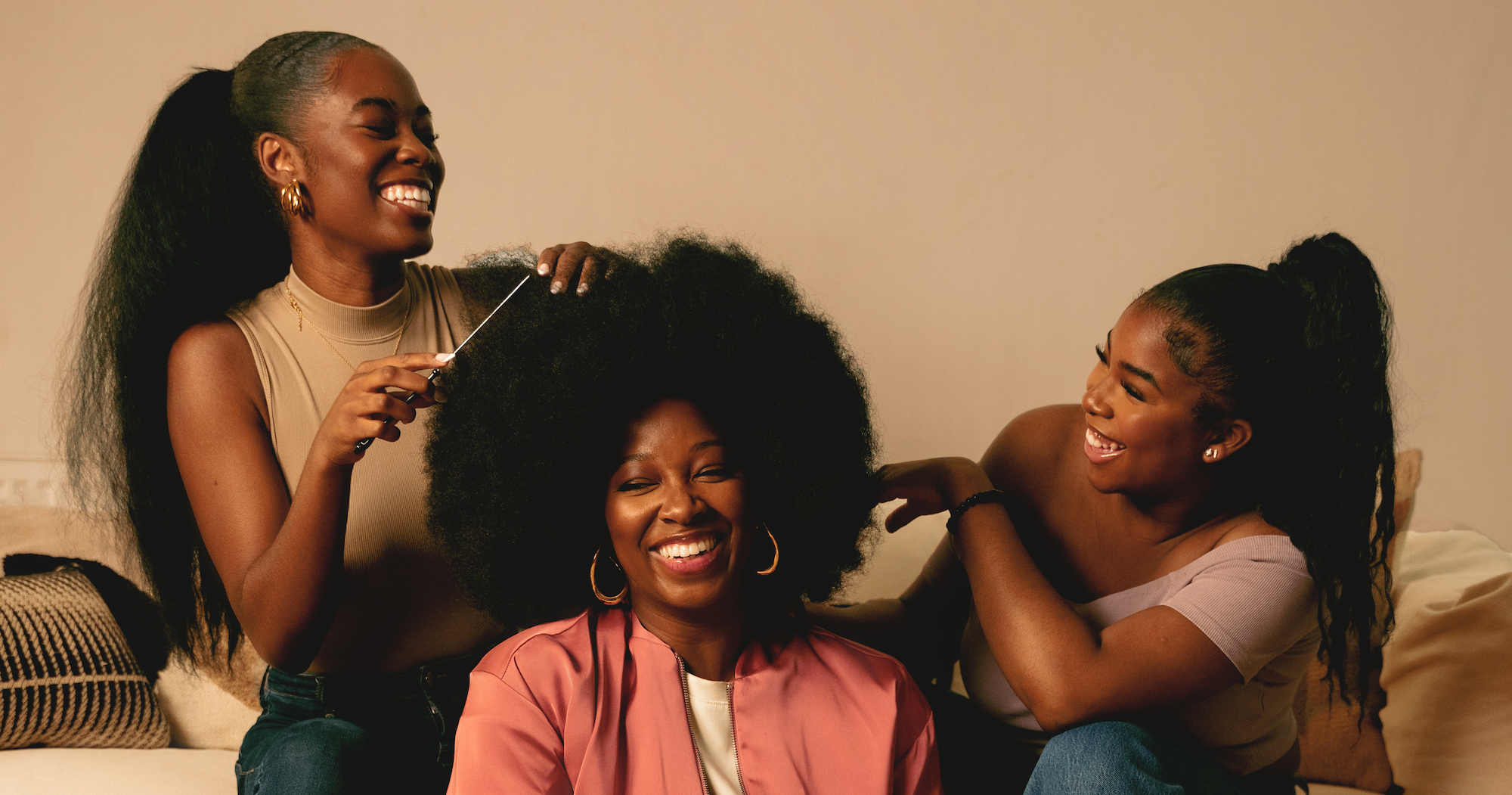
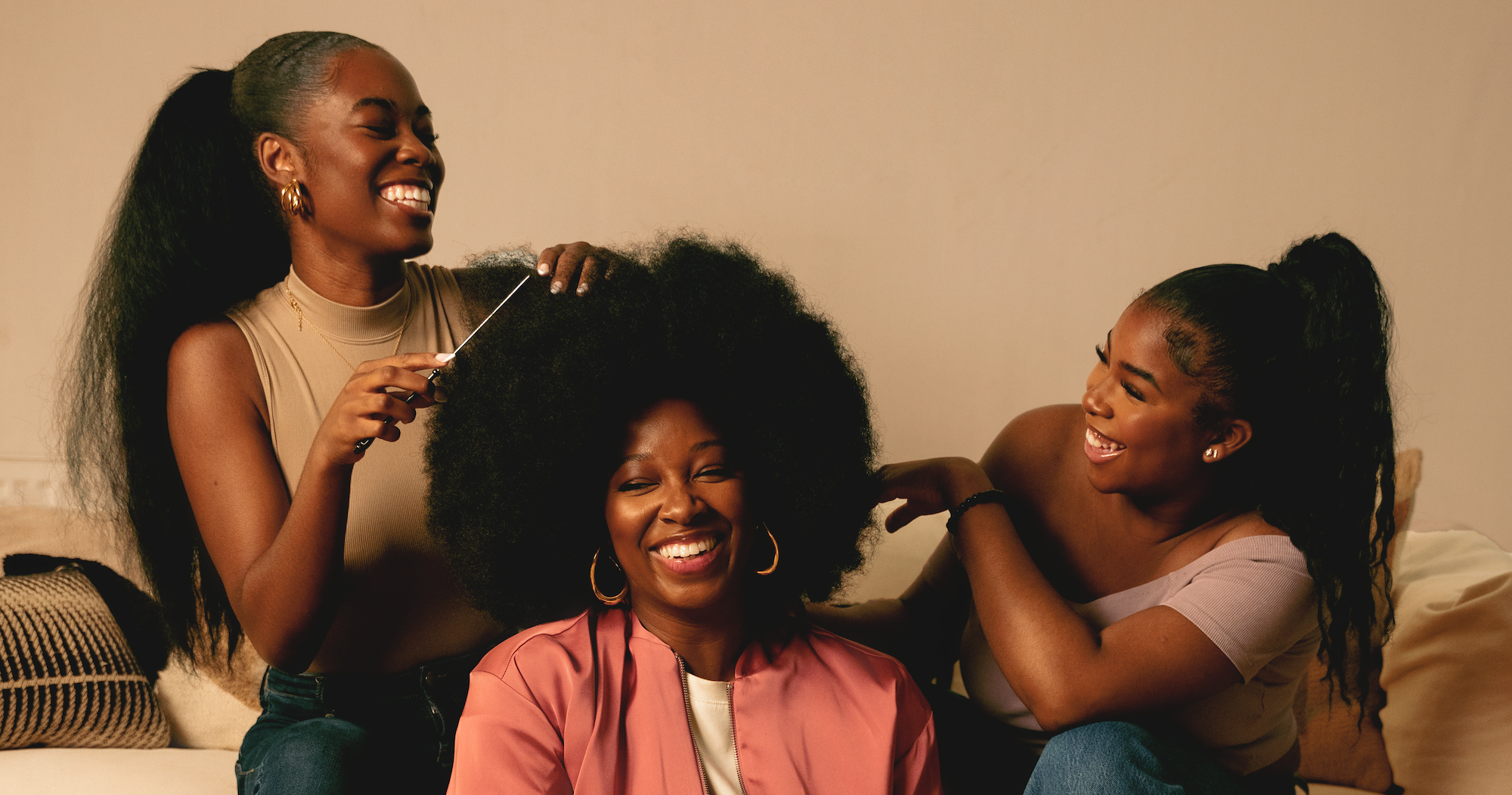
Back then, I remember watching Black, British, beautiful and talented Jamelia on (now defunct) MTV Base, awe-eyed and obsessed. What I didn’t realise was that, just like me, the famous star would soon re-examine her relationship with her natural hair. The internet-born natural hair movement had yet to come into the public consciousness, and all I wanted was GHDs, a relaxer and a super straight weave with yaki hair extensions. I spent much of the 2010s with heat damage, as many of my friends did — an all-too-familiar millennial tale. For many Black women who grew up well before natural hair bloggers began sharing self-loving afro hair tutorials on YouTube, the journey to embracing afro hair textures, especially the tightest of curl patterns, was one filled with misinformation, internalised texturism and insecurities. For some of us, it still is. Despite significant commercial progress made in the Black hair care industry (from product innovation to representation in media and advertising), there appears to be unspoken generational differences between Black women and girls who witnessed the far-reaching embrace of natural hair on social media in their formative years and those who didn’t.